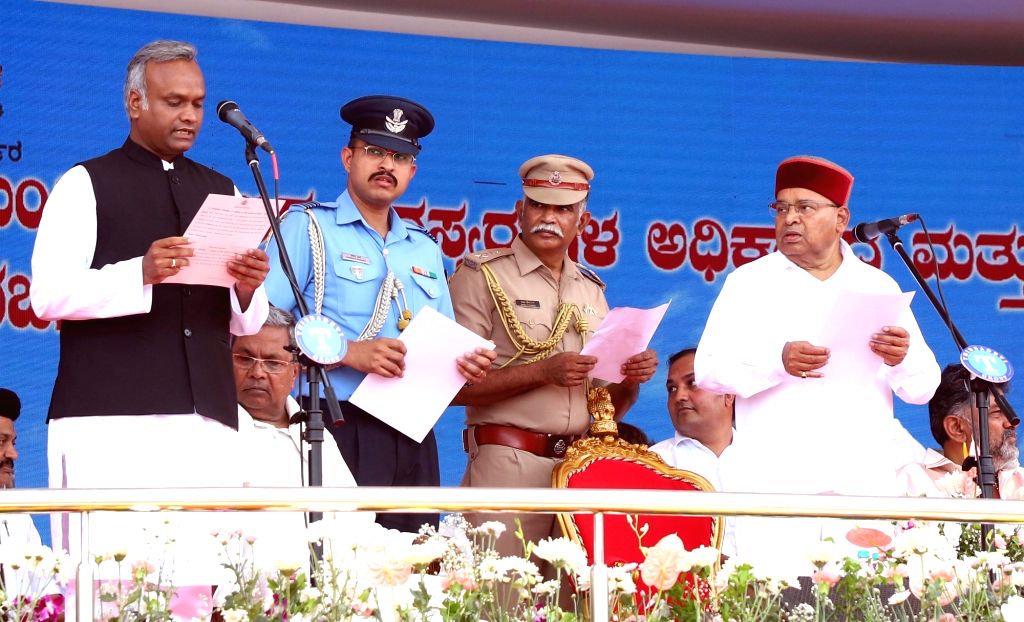
The Office of Governor — Constitutional Framework
Under the Indian Constitution, the Governor serves as the Head of State for each state, appointed by the President of India on the advice of the Union Government. Articles 153 to 167 of the Constitution outline the powers, functions, and responsibilities of the Governor. The office is designed to serve as a critical link between the Union and State governments, ensuring the smooth functioning of constitutional governance at the state level.
For Thawar Chand Gehlot, the appointment as Governor of Karnataka in July 2021 represented a natural progression from his decades of legislative and executive experience at the national level. His transition from an active political role — as a senior Union Minister and Leader of the House in Rajya Sabha — to the constitutionally defined role of a non-partisan Governor required a fundamental shift in approach, from partisan advocacy to impartial stewardship.
Karnataka, as India's sixth-largest state by area and eighth-largest by population, with over 67 million people, presents unique governance challenges. It is home to Bengaluru — India's technology capital — while also encompassing vast rural hinterlands with agrarian economies. The state's political landscape is multi-polar, with intense competition between the BJP, Congress, and the JD(S), making the Governor's role in managing government formation and legislative processes particularly consequential.
Legislative Functions & Responsibilities
The Governor's legislative role is multifaceted and constitutionally significant. As the formal head of the state legislature, the Governor summons and prorogues sessions of the state legislature, addresses the legislature at the commencement of each session, and provides assent to bills passed by the legislature — or reserves them for consideration by the President of India.
Governor Gehlot's approach to legislative functions has been marked by a careful balance between constitutional propriety and the executive prerogatives of the elected government. His decades of parliamentary experience have given him a nuanced understanding of legislative processes that few governors possess. He understands the importance of timely assent to legislation for effective governance, while also recognising the Governor's constitutional duty to examine bills carefully.
His handling of legislative matters has included engagement with several contentious pieces of legislation. In his capacity as Governor, he has exercised his constitutional discretion on bills related to reservation policies, university governance reforms, and land reform measures. Each decision has been guided by a thorough examination of constitutional provisions, legal opinions, and the broader implications for governance and social justice.
Key Legislative Responsibilities
- Summoning and proroguing sessions of the Karnataka State Legislature
- Addressing the legislature at the commencement of sessions with the government's policy agenda
- Granting assent to bills or withholding/reserving them for Presidential consideration
- Issuing ordinances when the legislature is not in session
- Recommending the imposition of President's Rule if the constitutional machinery breaks down
University Chancellor Role
One of the most significant but often underappreciated aspects of the Governor's role in India is the chancellorship of state universities. The Governor of Karnataka serves as the Chancellor of over 60 state universities and educational institutions — making this one of the most substantial university governance responsibilities of any gubernatorial office in India.
Governor Gehlot has taken an active interest in higher education governance, focusing on academic standards, institutional autonomy, and equitable access. His background as the Union Minister for Social Justice & Empowerment — where he oversaw massive scholarship programmes — uniquely positions him to understand the intersection of education and social mobility. His advocacy for ensuring that university admissions and governance processes reflect constitutional mandates on reservation and social inclusion has been a defining feature of his chancellorship.
Under his oversight, there has been a renewed emphasis on accountability in university administration, the appointment of qualified vice-chancellors through transparent processes, and the promotion of research and innovation. He has also championed the cause of Persons with Disabilities in higher education, drawing on his ministerial experience in implementing accessibility standards across educational institutions.
Public Engagement & Governance Approach
Despite the traditionally ceremonial perception of the Governor's office, Thawar Chand Gehlot has maintained an active engagement with the public life of Karnataka. His approach combines the constitutional dignity of the office with an accessible leadership style rooted in his grassroots political background.
Key aspects of his public engagement include:
- Republic Day and Independence Day Addresses: His ceremonial addresses have consistently emphasised themes of national unity, social justice, and inclusive development — reflecting his career-long advocacy for marginalised communities.
- Raj Bhavan as Public Space: Under his governorship, the Raj Bhavan has hosted numerous cultural events, academic seminars, and community gatherings, transforming it from a distant symbol of authority into a more accessible institution.
- Engagement with Educational Institutions: As Chancellor, he has regularly visited universities, participated in convocations, and interacted with students and faculty — bringing a personal touch to what can be a distant administrative role.
- Diplomatic & Federal Functions: His role in hosting dignitaries, facilitating centre-state communication, and representing Karnataka on constitutional occasions has been discharged with the gravitas and experience of a veteran of India's political establishment.
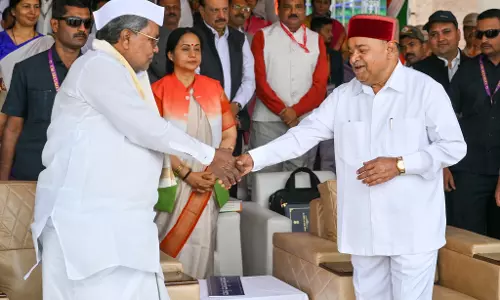
State Governance
Engaging with Karnataka's constitutional responsibilities

Constitutional Action
Exercising legislative judgment on key state matters
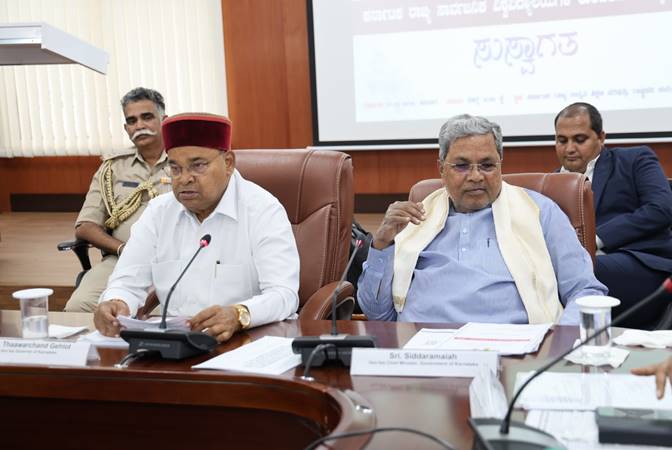
The Raj Bhavan
Serving as the constitutional head of Karnataka
State-Centre Coordination
The Governor's role as a link between the Union and State governments is constitutionally significant, particularly in India's complex federal structure. Governor Gehlot's extensive experience at the national level — as a five-term Rajya Sabha member, Union Minister, and Leader of the House — gives him an exceptional understanding of the centre-state dynamic.
His approach to state-centre relations has been informed by a deep appreciation for the principles of cooperative federalism. He has facilitated communication between the state government and the Union on matters ranging from disaster relief to development planning, acting as an effective conduit for Karnataka's interests at the national level. His personal relationships with senior Union leaders, built over decades of national politics, have provided Karnataka with a channel of communication that is both formal and personal.
At the same time, he has maintained the constitutional balance that the Governor's office requires — acting as the President's representative in the state while respecting the elected government's mandate. This balance, always delicate in Indian federalism, has been managed with the finesse that only a lifetime of political experience can provide.